
Uncategorized

How to Source Surplus Textiles from Pakistan: Factory-Direct from Karachi

Surplus textile inventory represents one of the best opportunities for retailers, wholesalers, and importers to maximise margins — especially when buying directly from a manufacturer. This guide explains how to source surplus stock from Karachi-based factories like Al Madni Textiles, what to look for, and how the process works. What is Textile Surplus Stock? Surplus […]
Industry Insights

STANDARD 100 by OEKO-TEX vs GOTS for bedding: which buyers ask for which

[EXISTING BLOG CONTENT] Frequently Asked Questions What is OEKO-TEX Standard 100? OEKO-TEX Standard 100 is an independent testing and certification system for textiles at all production stages. It tests for harmful substances and ensures the final product is safe for skin contact. The certification covers everything from raw materials through finished textiles. What is GOTS

Industry Insights

Understanding OEKO-TEX and GOTS certification

Frequently Asked Questions Q: What is the difference between colorfastness to washing and colorfastness to rubbing? A: Wash fastness measures how much dye bleeds when the fabric is laundered, rated 1–5 (5 = no change). Rub fastness measures dye transfer to a dry or wet white cloth under friction. Both are tested separately — a

Production Technique

How lab dips work and why first-time-right matters

[EXISTING BLOG CONTENT] Frequently Asked Questions About Lab Dips What exactly is a lab dip? A lab dip is a small-scale dye sample (typically 100-200g of fabric) created to test a color before bulk production. The fabric is dyed using the same process, dyes, and conditions as the full batch, allowing manufacturers and buyers to

Production Technique

How we control shrinkage in knitted fabrics

[EXISTING BLOG CONTENT] Frequently Asked Questions About Shrinkage Control What causes fabric shrinkage? Shrinkage occurs due to residual stress in yarn fibers and relaxation of the fabric structure during washing. Heat, moisture, and mechanical agitation (tumbling) trigger the release of this stress. Untreated knit fabrics can shrink 5-15% without proper shrinkage control measures. How do

Production Technique, Textile Manufacturing

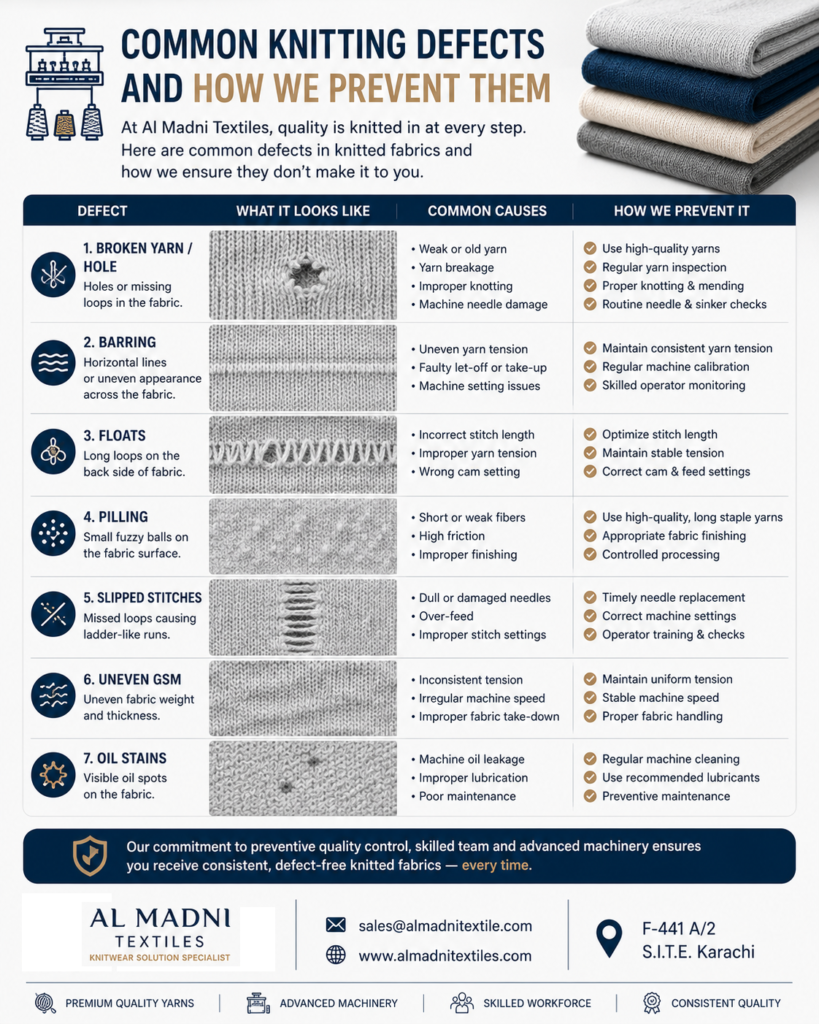
Common Knitting Defects and How We Prevent Them

Frequently Asked Questions Q: What are the most common knitting defects in circular knitting? A: The most frequent defects are dropped stitches (runs or ladders), holes from broken yarn, thick/thin places from yarn count variation, needle lines from damaged needles, and oil stains from machine lubrication. Each is detectable at inline fabric inspection — which

Textile Manufacturing

The journey from yarn to finished garment: our production flow

Frequently Asked Questions Q: How long does the complete production journey take from yarn to finished garment? A: For a standard order, the journey takes 35–60 days depending on product complexity. Yarn sourcing and knitting: 7–10 days. Dyeing and finishing at M.R. Garment Industries: 5–8 days. Fabric inspection, cutting, and stitching: 15–25 days. Final QC,

Production Technique

How we ensure colorfastness in knitted garments

Frequently Asked Questions Q: What colorfastness rating should I expect on black and navy knitted garments? A: Black and navy are the hardest shades to achieve high fastness on. A well-dyed black cotton knit should achieve wash fastness of 4–4.5 and rub fastness of 3.5–4. Anything below 3.5 on rub fastness for dark shades is

Fabric Knowledge

Reactive vs. Disperse vs. Vat Dyes: What Buyers Should Know

Frequently Asked Questions Q: Which dye type is best for 100% cotton knitted garments? A: Reactive dyes are the standard choice for 100% cotton — they form a chemical bond directly with the cellulose fibre, giving excellent wash fastness (4–4.5 rating) and a wide, vibrant colour range. For applications requiring the highest possible fastness (hospitality

Fabric Knowledge

Understanding GSM in Knitted Fabrics: A Buyer’s Guide

[EXISTING BLOG CONTENT] Frequently Asked Questions About GSM What does GSM stand for? GSM stands for “Grams per Square Meter.” It’s the standard measurement for fabric weight and density in the textile industry. A 200 GSM fabric weighs 200 grams for every square meter of material. How does GSM affect fabric quality? GSM directly impacts

Scroll to Top