
Production Technique

Production Technique

How lab dips work and why first-time-right matters

[EXISTING BLOG CONTENT] Frequently Asked Questions About Lab Dips What exactly is a lab dip? A lab dip is a small-scale dye sample (typically 100-200g of fabric) created to test a color before bulk production. The fabric is dyed using the same process, dyes, and conditions as the full batch, allowing manufacturers and buyers to […]
Production Technique

How we control shrinkage in knitted fabrics

[EXISTING BLOG CONTENT] Frequently Asked Questions About Shrinkage Control What causes fabric shrinkage? Shrinkage occurs due to residual stress in yarn fibers and relaxation of the fabric structure during washing. Heat, moisture, and mechanical agitation (tumbling) trigger the release of this stress. Untreated knit fabrics can shrink 5-15% without proper shrinkage control measures. How do

Production Technique, Textile Manufacturing

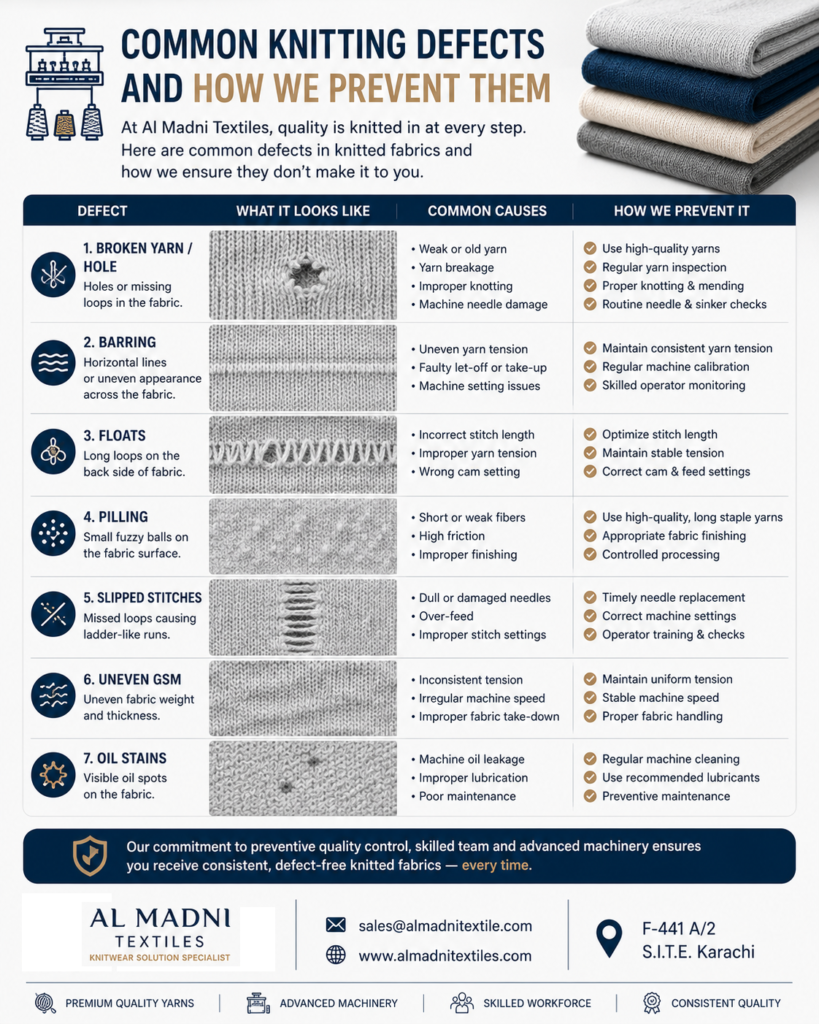
Common Knitting Defects and How We Prevent Them

Frequently Asked Questions Q: What are the most common knitting defects in circular knitting? A: The most frequent defects are dropped stitches (runs or ladders), holes from broken yarn, thick/thin places from yarn count variation, needle lines from damaged needles, and oil stains from machine lubrication. Each is detectable at inline fabric inspection — which

Production Technique

How we ensure colorfastness in knitted garments

Frequently Asked Questions Q: What colorfastness rating should I expect on black and navy knitted garments? A: Black and navy are the hardest shades to achieve high fastness on. A well-dyed black cotton knit should achieve wash fastness of 4–4.5 and rub fastness of 3.5–4. Anything below 3.5 on rub fastness for dark shades is

Production Technique

Inside Our Dyeing Unit: Batch vs. Continuous Dyeing Explained

Frequently Asked Questions Q: What is the main difference between batch dyeing and continuous dyeing? A: Batch dyeing processes one lot of fabric at a time in a closed machine — the fabric and dye bath interact repeatedly until the dye exhausts onto the fibre. Continuous dyeing passes fabric through a series of open troughs

Scroll to Top